
Metal Stamping
What types of metal stampings does Ampex manufacture?
Ampex Metal Products manufactures precision metal stampings, progressive die stampings, formed metal components, brackets, clips, shields, housings, frames, supports, structural reinforcements, covers, retainers, terminals, channels, and production metal components for OEM and Tier 1 applications.
Our stamping capabilities are commonly used for automotive components, appliance components, electrical components, industrial equipment parts, HVAC parts, mechanical assemblies, consumer product hardware, and general manufacturing applications.
How long has Ampex Metal Products been in business?
Ampex Metal Products is a privately owned family business that has been in business since 1960. We are a long-standing U.S.-based metal stamping manufacturer. Ampex is now a 3rd generation company with Andy, the company president, working alongside his two sons Andrew and Nolan, who are engineers at Ampex.
Where are Ampex Metal Products facilities located?
Ampex Metal Products operates from its manufacturing and office at 5581 W 164th Street, Brook Park, OH 44142. Ampex operates out of a dedicated warehouse/distribution center at 5540 W 164th Street, Brook Park, OH 44142, along with a second Distribution Center in Hidalgo, Texas. These facilities support manufacturing, warehousing, inventory management, distribution, and shipping for metal stamping, wire form, and spring.
What press capacity does Ampex offer for metal stamping?
Ampex operates one of the most diverse and capable stamping press departments in the region, with press capacities ranging from 22 tons up to 600 tons. This includes high-speed straight-side Minster and AIDA presses, progressive die capability, and large-bed equipment for wide-coil and heavy-gauge applications.
Ampex Stamping Presses Include:
- Mid-range presses: Multiple Minster and AIDA straight-side presses at 330-ton, 300-ton, 200-ton, 150-ton, 100-ton, 75-ton, 70-ton, 65-ton, 45-ton, 38-ton, 32-ton, and 22-ton.
- Largest press: Minster 600-ton E2 straight-side press with a 120″ bed and 50″ servo feed.
What material thickness can Ampex stamp?
Ampex supports a broad range of sheet metal thicknesses, from very thin gauge precision materials to heavy gauge production stampings. Based on current and historical production, Ampex routinely processes materials from approximately 0.006 inches up to 0.375 inches, depending on the material grade and part geometry.
This wide thickness capability allows Ampex to produce small precision stampings, medium gauge brackets and reinforcements, and large structural components that require higher tonnage and robust tooling.
What metals can Ampex stamp?
Ampex commonly works with a wide range of metals, including carbon steel, cold rolled steel, hot rolled steel, stainless steel, aluminum, HSLA steel, spring steel, galvanized and galvannealed steel, pre-plated steels, martensitic grades, copper, copper alloys, brass, phosphor bronze, beryllium copper, and other application-specific metals. We are familiar with aluminum grades such as 1100, 3003, 5052, and 6061, and we frequently work with spring steel grades ranging from 1050 through 1095.
Does Ampex manufacture progressive die stampings?
Yes. Progressive die stamping has been a core specialty at Ampex since 1960. With more than six decades of experience engineering and running complex progressive dies, Ampex supports high-volume production programs that require repeatable dimensions, tight process control, efficient material utilization, and consistent quality over long-term OEM demand. As an ISO 9001 certified manufacturer, Ampex maintains disciplined quality systems that ensure stable, reliable production throughout the life of each program.
Does Ampex build tooling in-house?
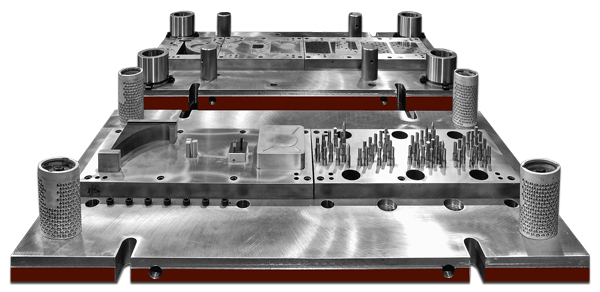
Yes. Ampex designs, builds, and maintains all production tooling in-house, giving us full internal control over quality, precision, and tool performance. By keeping tooling engineering, tool build, die maintenance, and repair under one roof. This internal control eliminates common communication gaps between tooling, production, and quality teams and provides OEMs with a more reliable, predictable manufacturing partner.
Can Ampex help with metal stamping design for manufacturability?
Yes. Ampex provides design-for-manufacturability support using customer drawings, CAD models, part samples, and other engineering files. Our team works directly with engineers to review part geometry, material choices, tolerances, and production intent to ensure the design is optimized before tooling begins.
With experience dating back to 1960, Ampex routinely helps our customers identify cost-saving ideas and improvements to manufacturability, such as simplifying features, improving material utilization, reducing secondary operations, or adjusting design elements that impact tooling complexity or long-term production viability.
What is the best production volume for Ampex metal stamping programs?
Ampex is best suited for high-volume, repeat production programs where annual usage typically ranges from 100,000 to 10,000,000 pieces. This volume range aligns well with our progressive die stamping capabilities, in-house tooling control, and high-speed press equipment.
Ampex is an ideal fit for OEM production parts and Tier 1 supplier programs to support high-volume and long-running programs, Ampex also warehouses up to six weeks of finished inventory at no cost to the customer. This stocked inventory helps our customers stabilize their supply, absorb demand fluctuations, and ensure uninterrupted delivery for critical production schedules.
Can Ampex quote low-volume prototype metal stampings?
Ampex can review prototype and pre-production opportunities, particularly when the part is expected to move into repeat production. We can also support prototype parts during early design stages to help validate geometry, material choices, and manufacturability before committing to production tooling. For stamping programs, Ampex is generally best suited for annual volumes in the 10,000 to 75,000 EAU range for lower-volume production.
What information does Ampex need to quote a metal stamping?
For the most accurate and timely quote, Ampex recommends providing the following information:
- 2D drawing or engineering print
- 3D CAD file if available
- Finish, plating, coating, or heat-treat requirements
- Estimated annual usage or release quantities
- Project Timeline
Ampex can also review part samples when available. Physical samples can significantly speed up the quoting process.
Commonly accepted file types include:
dxf, dwg, stp, step, igs, iges, cad, blend, prt, sldprt, sldasm, pdf, doc, docx, xls, xlsx, ppt, pptx, txt, jpg, jpeg, png, svg, psd, zip, rar, gz.RFQs can be submitted directly through our website or by emailing all files and details to [email protected].
Ready to start your next project?
Partner with Ampex for precision metal stampings built to perform.
4-Slide and Multi-Slide Stamping
What is 4-slide metal stamping?
4-slide metal stamping (also called four-slide, multi-slide, or vertislide stamping) is a high-speed metal stamping process that uses four independently driven slides arranged around a central forming die. Each slide carries tooling that moves horizontally toward the workpiece, allowing multiple bends and forms to be completed in rapid sequence from different directions.
Unlike a traditional stamping press, where the movement is vertical and limited to one primary stroke, a 4-slide machine uses four synchronized motions – and in the case of multi-slide machines, additional auxiliary slides—to create complex parts with exceptional speed and repeatability.
This process is ideal for clips, terminals, brackets, spring clips, retainers, contacts, wire forms, and small precision components that require multiple bends, wraps, or intricate geometries.
- Historical Background: How 4-slide and Multi-slide Technology Evolved
4-slide stamping has roots dating back to the early 1900s, when manufacturers needed a faster, more flexible way to produce small formed metal parts for emerging industries such as electrical components, appliances, and early automotive hardware.
- Key historical milestones:
Early 1900s – Birth of the 4-slide concept Companies like Nilson and U.S. Baird pioneered the first mechanical 4-slide machines. These early systems used cam-driven mechanisms to coordinate multiple linear slides, enabling complex bending operations that were impossible or inefficient in single-hit presses.
Mid-20th century – Expansion into automotive and appliance markets By the 1950s – 1970s, 4-slide stamping became a dominant process for high-volume production of small metal components. The machines were prized for their speed, low tooling cost, and ability to produce multi-bend parts in a single cycle.
What is the difference between progressive die stamping and 4-slide stamping?
Progressive die stamping feeds strip material through a series of stations in a stamping press, making it well-suited for flat parts, brackets, and component. It is typically the best choice when the geometry can be produced in a forward-moving strip layout with bends that occur in a predictable sequence.
4-slide stamping uses multiple linear slides that approach the part from different directions, allowing bends, wraps, and forming actions that cannot be achieved in a straight-line progressive die. Because the forming tools move horizontally and independently, 4-slide machines can create closed shapes, interlocked features, wrapped forms, and complex bend geometry that would require multiple secondary operations in a progressive die.
Ampex has decades of experience using 4-slide and multi-slide equipment to produce small, intricate components with multi-directional bends, spring-like features, and interlocking forms. Because these features are created directly in the 4-slide stamping process, interlocked shapes can be produced without secondary operations. The process also offers excellent material utilization, making it highly efficient for complex small parts where progressive die stamping would require additional stations, added tooling cost, or post-stamping operations.
Does Ampex manufacture 4-slide and multi-slide components?
Ampex operates a fleet of more than 50 dedicated 4-slide and multi-slide machines, allowing us to assign equipment specifically to your program and support high-volume, repeat production with stable output and consistent quality. This capacity also enables Ampex to dedicate a specific 4-slide or multi-slide machine to your part, ensuring stable long-term production and consistent output for OEM and Tier 1 programs.
What materials can be used for 4-slide or multi-slide parts?
Ampex works with a wide range of strip and wire materials suitable for 4-slide and multi-slide stamping. The most common materials we work with include brass, copper, phosphor bronze, and beryllium copper, which are frequently used for electrical contacts, terminals, clips, and precision small components due to their formability and conductivity.
Ampex also supports carbon steel, stainless steel, spring steels, galvanized and pre-plated steels, and various wire grades depending on the part’s performance requirements.
Typical materials include:
- Brass
- Copper
- Phosphor bronze
- Beryllium copper
- Carbon steel (CRS / HRS)
- Stainless steel • HSLA
- Galvanized and galv-anneal steels
- Pre-plated steels
- Aluminum (1100, 3003, 5052, 6061)
- Music wire
- Hard-drawn wire
- Oil-tempered wire
This range allows Ampex to support both electrical and mechanical components, from highly formable copper-based alloys to high-strength steels
What types of parts are good candidates for 4-slide stamping?
Yes. Ampex manufactures 4-slide and multi-slide stamped components for production applications. These processes are often selected when a part requires complex bends, small part complex geometry or interlocking features that cannot be produced efficiently in a progressive die.
Common 4-slide candidates include:
- Spring clips
- Retaining clips
- Electrical contacts and terminals
- Straight cut to length rods
- Interlocked or wrapped forms
- Wire forms and specialty wire components
- Appliance and automotive clips
- Small brackets and precision bent parts
Can 4-slide stamping reduce tooling cost compared with other methods?
Yes, in many cases 4-slide stamping can reduce tooling cost. Because 4-slide and multi-slide tools are typically smaller and more compact than progressive dies, they often require less steel, and fewer stations. This smaller tool footprint can significantly lower upfront tooling investment, especially for small parts with multiple bends or wrapped features.
4-slide tooling can also eliminate secondary forming operations by creating complex bends and interlocked shapes directly in the machines tooling. 4-slide stamping is most cost effective in interlocked parts and the tooling is often less than progressive die stamping.
What information is needed to quote a 4-slide or multislide part?
For the most accurate and timely quote, Ampex recommends providing the following information:
• 2D drawing or engineering print
• 3D CAD file if available
• Material specification
• Material thickness or wire diameter, if applicable
• Critical tolerances
• Finish, plating, coating, or heat treat requirements
• Estimated annual usage
• Project timeline
• Part sample if available
Commonly accepted file types include:
dxf, dwg, stp, step, igs, iges, cad, blend, prt, sldprt, sldasm, pdf, doc, docx, xls, xlsx, ppt, pptx, txt, jpg, jpeg, png, svg, psd, zip, rar, gz.
Ampex can also review part samples when available. Physical samples help our tooling design and significantly speed up the quoting process.RFQs can be submitted directly through our website or by emailing all files and details to [email protected].
Ready to start your next project?
Partner with Ampex for precision metal stampings built to perform.
CNC Wire Forming
Does Ampex manufacture CNC wire forms?
Yes. Ampex manufactures CNC wire forms for industrial, appliance, automotive, electrical, electronic, transportation, and general manufacturing applications. Our CNC wire-forming capability supports all low-volume, medium-volume and high-volume production, including programs that run up to 5,000,000 parts per year.
Ampex operates 11 CNC wire-forming machines in active production, giving us the capacity to support multiple long-running programs simultaneously. For high-volume applications, we can dedicate a specific CNC wire-forming machine to your part. This ensures stable long-term production, consistent repeatability, and reliable scheduling throughout the life of the program.
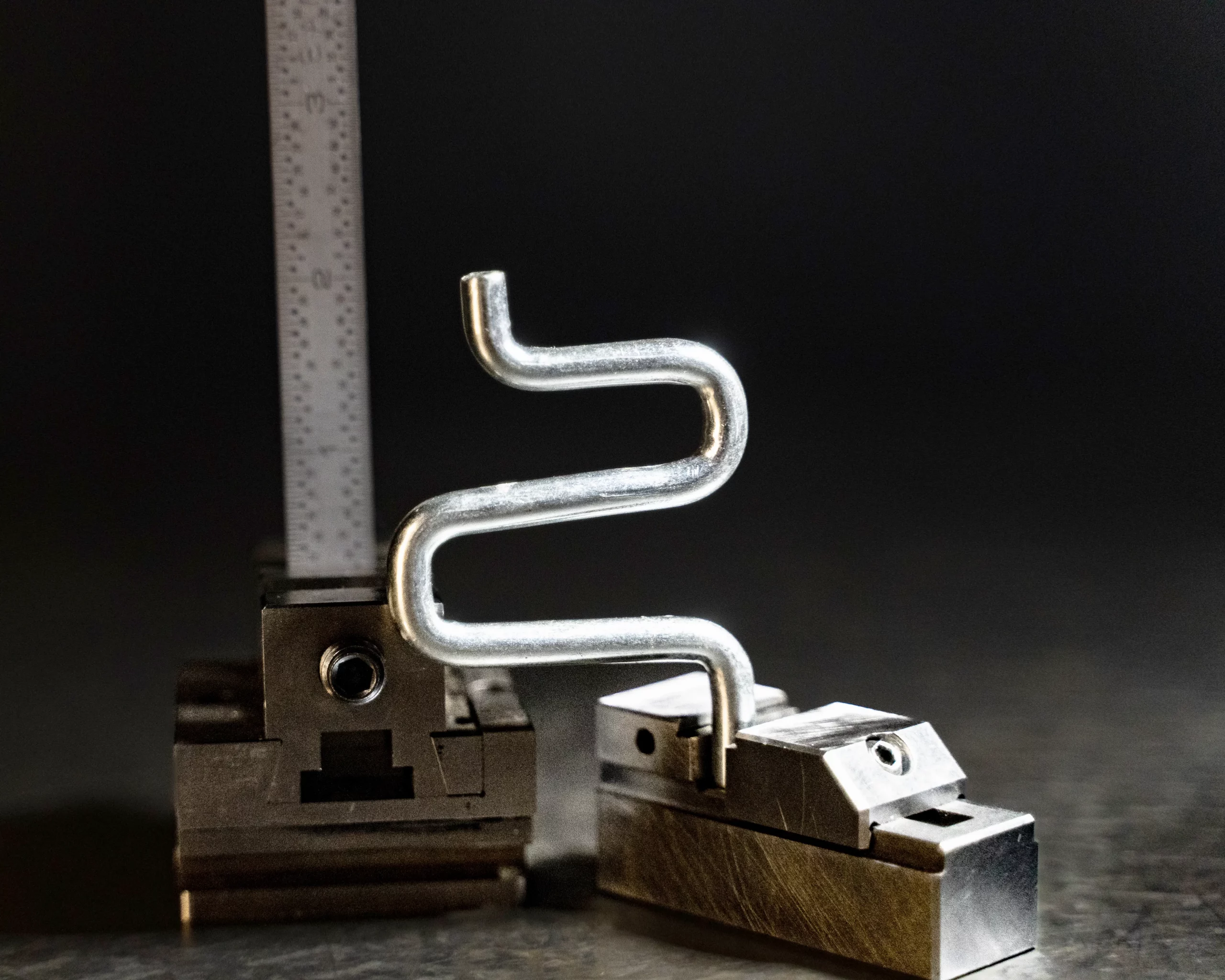
CNC wire forming is commonly used for hooks, clips, handles, retainers, guards, brackets, rings, pins, spring wire components, formed wire assemblies, and custom wire parts.
What wire diameters can Ampex form?
Ampex supports CNC wire forming across a range of wire diameters. The current production capability content identifies CNC wire forming from approximately Ø0.030 inches to Ø0.315 inches, depending on material, geometry, bend radius, tolerances, and production requirements.
What materials can be used for wire forms?
Ampex manufactures wire forms using a wide range of wire materials suitable for industrial, appliance, automotive, electrical, and general manufacturing applications. The most common materials include music wire, stainless steel, hard-drawn wire, oil-tempered wire, and copper-based alloys. Coated and specialty wires are also supported depending on the performance requirements of the part.
Typical wire form materials include:
- Stainless steel
- Music wire
- Oil-tempered wire
- Hard-drawn wire
- Phosphor bronze
- Copper
- Aluminum
- Coated wire (galvanized, zinc, nickel, tin)
- Spring and high-carbon steel
What industries use CNC wire forms?
Ampex manufactures CNC wire-form parts at high volume for a wide range of industries, including lawn and garden, appliance, heavy machinery, automotive, electrical, HVAC, and general industrial manufacturing. We support both medium-volume and high-volume programs, including annual requirements up to 5,000,000 parts per year, with the ability to dedicate a machine to your part.
CNC wire forms are commonly used in:
• Lawn and garden equipment
Used for handles, linkages, throttle rods, control springs, cable guides, brackets, and structural wire components found in mowers, trimmers, blowers, and outdoor power equipment.
• Appliance manufacturing
Used for racks, guards, clips, retainers, wire handles, support frames, and internal mechanical linkages in refrigerators, dishwashers, ovens, laundry equipment, and small appliances.
• Heavy machinery and industrial equipment
Used for control rods, safety retainers, brackets, clamps, wire-based mechanisms, and structural wire components that must withstand vibration, load, and repeated mechanical motion.
• Automotive and transportation
Used for clips, pins, retainers, linkages, brackets, spring wire components, and wire-formed assemblies used in seating, latching, HVAC, electrical routing, and under-hood systems.
• Electrical and electronics
Used for grounding clips, wire retainers, contact springs, terminal components, and wire-based mechanical supports.
• HVAC and mechanical systems
Used for brackets, hangers, clips, retainers, and wire-formed supports used in air handling units, condensers, furnaces, and ventilation systems.
• General manufacturing
Ampex’s 11 CNC wire-forming machines allow us to support multiple industries simultaneously while dedicating equipment to high-volume programs for stable, long-term production.
What is the minimum volume for CNC wire forming?
Ampex is generally best suited for repeat production wire-forming programs rather than one-off or low-volume hand-bent parts. The minimum annual volume Ampex quotes for CNC wire forming department is approximately 10,000 pieces per year. Volumes lower than 10,000 pieces per year faces cost drivers such as minimum order quantities or material, minimum lot charges from plating or secondary finishing companies often driving up the cost of each part.
Can Ampex reverse engineer an existing wire form?
Ampex can review existing wire form samples, CAD data, and part photos to determine whether the component can be quoted and manufactured. For the most accurate quote, a well detailed drawing, a sample if available, and annual usage is preferred.
Can Ampex manufacture wire form assemblies?
Yes. Ampex can manufacture wire forms that function as stand-alone components or as part of a larger assembly. We specialize in integrated stamping and wire-form assemblies, where a stamped metal component and a formed wire element are combined into a single production part. This approach is common in appliance, automotive, lawn and garden, and industrial equipment applications where both structural and spring-like features are required.
What information is needed to quote a wire form?
For the most accurate and timely quote, Ampex recommends providing the following information:
• Wire form type or part description
• 2D drawing or engineering print
• 3D CAD file if available
• Functional requirements (if applicable)
• Estimated annual usage
• Project timeline
Commonly accepted file types include:
dxf, dwg, stp, step, igs, iges, cad, blend, prt, sldprt, sldasm, pdf, doc, docx, xls, xlsx, ppt, pptx, txt, jpg, jpeg, png, svg, psd, zip, rar, gz.
Ampex can also review part samples when available. Physical samples can significantly speed up the quoting process.RFQs can be submitted directly through our website or by emailing all files and details to [email protected].
Ready to start your next project?
Partner with Ampex for precision metal stampings built to perform.
CNC Spring Making
Does Ampex manufacture springs?
Yes. Ampex supports CNC spring manufacturing for production applications. We produce compression springs, extension springs, torsion springs, coil springs, helical springs, and custom wire-formed spring components used across appliance, automotive, lawn and garden, industrial equipment, electrical, and general manufacturing markets.
Ampex is best suited for high-volume spring programs with stable annual demand. Our production capacity ranges from 10,000 pieces per year up to 5,000,000 pieces per year, depending on wire size, complexity, and material. This volume range allows us to dedicate equipment to long-running programs, ensuring consistent output, repeatable setups, and reliable scheduling throughout the life of the part.
Our CNC spring-forming equipment is optimized for repeat production rather than prototype or low-volume work, making Ampex a strong fit for OEM and Tier 1 customers who require dependable, long-term spring manufacturing support.
What spring materials does Ampex work with?
Ampex works with common spring materials including music wire, hard drawn wire, oil-tempered wire, stainless steels, chrome silicon, and other spring materials selected based on load requirements, fatigue performance, corrosion resistance, operating environment, and customer specification.
What wire diameters can Ampex use for springs?
Ampex supports spring wire diameters across a defined production range. The current production capability content identifies CNC spring making from approximately Ø0.030 inches to Ø0.197 inches, depending on spring type, material, coil geometry, load requirements, and production requirements.
What information is needed to quote a spring?
For the most accurate and timely quote, Ampex recommends providing the following information:
- Spring type: compression, extension, torsion, or custom
- 2D drawing or engineering print
- 3D CAD file if available
- Load requirements
- Finish, plating, coating, or heat-treat requirements
- End configuration
- Estimated annual usage
- Drawing, CAD file, or sample if available
Commonly accepted file types include:
dxf, dwg, stp, step, igs, iges, cad, blend, prt, sldprt, sldasm, pdf, doc, docx, xls, xlsx, ppt, pptx, txt, jpg, jpeg, png, svg, psd, zip, rar, gz.
Ampex can also review part samples when available. Physical samples can significantly speed up the quoting process.
RFQs can be submitted directly through our website or by emailing all files and details to [email protected].
Ready to start your next project?
Partner with Ampex for precision metal stampings built to perform.
Tooling, Engineering and Pre-Production Support
Does Ampex design and build tooling?
Yes. Ampex designs, builds, maintains, repairs, and refurbishes tooling in-house. Our tooling capabilities cover progressive dies, 4-slide and multi-slide tooling, fixtures, gauges, and custom tooling required for metal stamping, wire forming, and assembly operations. This internal control allows Ampex to support faster launches, tighter quality control, and long-term production stability.
Ampex also accepts customer-supplied or pre-built dies. When a tool is transferred to us, our toolroom evaluates the condition, performs any required refurbishment, and restores the tool to production-ready status. Many transferred tools are upgraded or rebuilt to improve reliability, reduce downtime, and extend tool life.
Ampex maintains a fully equipped, climate-controlled toolroom with CNC machining, Wire EDM, surface grinding, milling, turning, and full die-maintenance capability. Ampex toolroom includes multiple Mitsubishi Wire EDM machines, vertical machining centers, surface grinders, CNC milling machines, precision inspection equipment, and dedicated tooling fixtures.
When Ampex builds a tool, we guarantee and maintain it for the life of your part. Customers are not asked for additional tooling dollars once the tool is built and approved.
Can Ampex help reduce tooling cost?
Yes. Ampex helps customers reduce tooling cost through design review, process optimization, and our fully in-house tooling capabilities. All tooling is designed, built, maintained, and refurbished in our own internally controlled toolroom, we eliminate the outsourcing markups and long lead times that many suppliers pass on to customers.
Ampex is able to offer low-cost tooling. Our in-house team allows us to offer pricing that is often competitive with overseas suppliers, including China. This approach helps customers launch programs faster and at a lower upfront cost. Ampex maintains the tool for the life of the part.
Can Ampex quote from a STEP file or DXF file?
Yes. Ampex can review RFQ packages that include STEP, STP, DXF, DWG, IGES, PDF drawings, and other engineering files. A complete RFQ package should include a well detailed drawing, annual volume, and project timeline.
If full information is not yet available, Ampex can also provide budgetary pricing based on preliminary files such as STEP, DXF, or early-stage drawings. Budgetary quotes help customers evaluate feasibility and optimize their design before final prints are released.
For the most accurate quote, Ampex recommends including a well detailed drawing including finishing specifications, critical dimensions, and any cleanliness specification the part requires.
Can Ampex work from a sample part if no drawing is available?
Yes. Ampex can review sample parts when no drawing is available. A drawing and sample are strongly preferred for quoting. Depending on the part or design stage, Ampex may be able to provide a budgetary quotation.
For preliminary design-stage projects, Ampex may need additional information before quoting, including critical dimensions, material requirements, finish or coating requirements, part function, any cleanliness specifications and estimated annual usage.
Does Ampex help with material selection?
Yes. Ampex can review material requirements and help determine whether the selected metal is appropriate for the stamping process, part geometry, strength requirements, corrosion requirements, spring characteristics, plating requirements, and production cost targets.
When appropriate, Ampex has also offered cost-saving material substitute recommendations to customers, especially where an alternate material may improve manufacturability, reduce cost, better material availability (lower cost of raw material), or better match the application requirements.
Can Ampex support early engineering review before an RFQ is finalized?
Yes. Ampex regularly supports early-stage engineering review before a formal RFQ is issued. Many of our long-term customers involve us early in their design process. Engineers – especially newer team members – often come to us for guidance on stamping design and possible improvements based on their application.
Ampex can review your project, early collaboration helps customers avoid cost drivers and ensure the part is designed for the most efficient manufacturing process from the start.
Can Ampex help with plating or coating recommendations?
Yes. Ampex can assist with plating and coating recommendations during early design. We frequently work with both pre-plated materials and post-plating finishing, we can help engineering teams determine the easiest to manufacture and cost-appropriate approach for their application. Our experience includes running high-volume production using pre-plated steels, pre-plated copper, coated wire, galvanized materials, and other specialty finishes that reduce or eliminate post processing.
When post-plating is required, Ampex supports a wide range of technical finishing processes including zinc plating (Yellow Chromate, Zinc Clear, Trivalent Black Chromate, ASTM B633 Standard, Zinc Flake, Hydrogen Embrittlement Relief (baking), and Zinc spraying), silver plating, nickel plating, tin plating, e-coating, black oxide, powder coatings, and various passivation treatments. We also support heat treating, stress relieving, passivation, deburring, and customer-specific corrosion-resistant finishes.
When should pre-plated material be used versus post-plated material?
Pre-plated material is in most cases a coil, or wire that is plated before stamping or forming. Post processed plated parts are stamped first, potentially welded second, then plated after the part is complete.
Pre-plated material may be a good option when the plated surface is needed primarily on selected areas of the part (selective plating), or when the design does not require full plating coverage on cut edges. Pre-plated material is often a cheaper option compared to post stamping plating if the application permits it.
Advantages of pre-plated material:
- Can reduce secondary finishing steps
- May reduce cost on high-volume programs
- Can support selective plating requirements, selective plating after stamping is a large cost driver
- Useful for electrical or conductive surfaces
- Provides consistent finish on coil or strip surfaces
Limitations of pre-plated material:
- Cut edges may expose bare base metal
- Tooling can scratch or mark the finish
- May not meet higher corrosion requirements if exposed edges are an issue (salt spray test failure)
- Not always suitable for deep draws
Post-plated material may be a better option when the part requires full plating coverage after stamping. It is often best suited for a clean cosmetic finish or application based when plated parts are best suited.
Advantages of post-plated material:
- Better coverage of cut edges and formed features
- Often better for corrosion protection
- Can improve cosmetic appearance
- Easier to control the plating process
- Better suited for parts where exposed raw edges are not acceptable
Limitations of post-plated material:
- Adds a secondary operation
- Can increase lead time and cost
- May require masking, racking, or special handling
- Plating thickness can affect tight tolerances
- Certain high-strength materials may require additional process controls to avoid hydrogen embrittlement
Ready to start your next project?
Partner with Ampex for precision metal stampings built to perform.
Secondary Operations and Assemblies
What secondary operations does Ampex support?
Ampex supports several secondary operations and assembly-related processes, including spot welding, resistance welding, butt welding, orbital riveting, staking, tapping, PEM nut insertion, deburring, heat treating, plating coordination, coating coordination, special packaging, kitting, and production assembly support.
Ampex can also support plastic/rubber-to-metal subassembly where a stamped metal component, wire form, spring, bracket or clip metal part is assembled to a plastic or rubber component as part of the final assembly. These applications may include metal brackets with plastic spacers, clips with plastic retainers, or assembles with rubber grommets.
Does Ampex manufacture welded assemblies?
Yes. Ampex can manufacture welded metal assemblies depending on the scope of the project. Our welding capabilities include resistance welding, spot welding, and butt welding.
Welded assemblies are reviewed based on geometry, material type, joint design, and annual usage to ensure the process is stable and repeatable for high-volume production. Ampex is experienced in supporting Tier 1 automotive programs that exceed 1,000,000 parts per year, including components that require secondary (spot, resistance, butt) welding, and staking. This high-volume capability allows us to maintain consistent weld quality, manage long-term reliability, and meet demanding automotive, appliance, and industrial production schedules. Ampex also warehouse finished goods for customers to support release schedules and reduce production line risk.
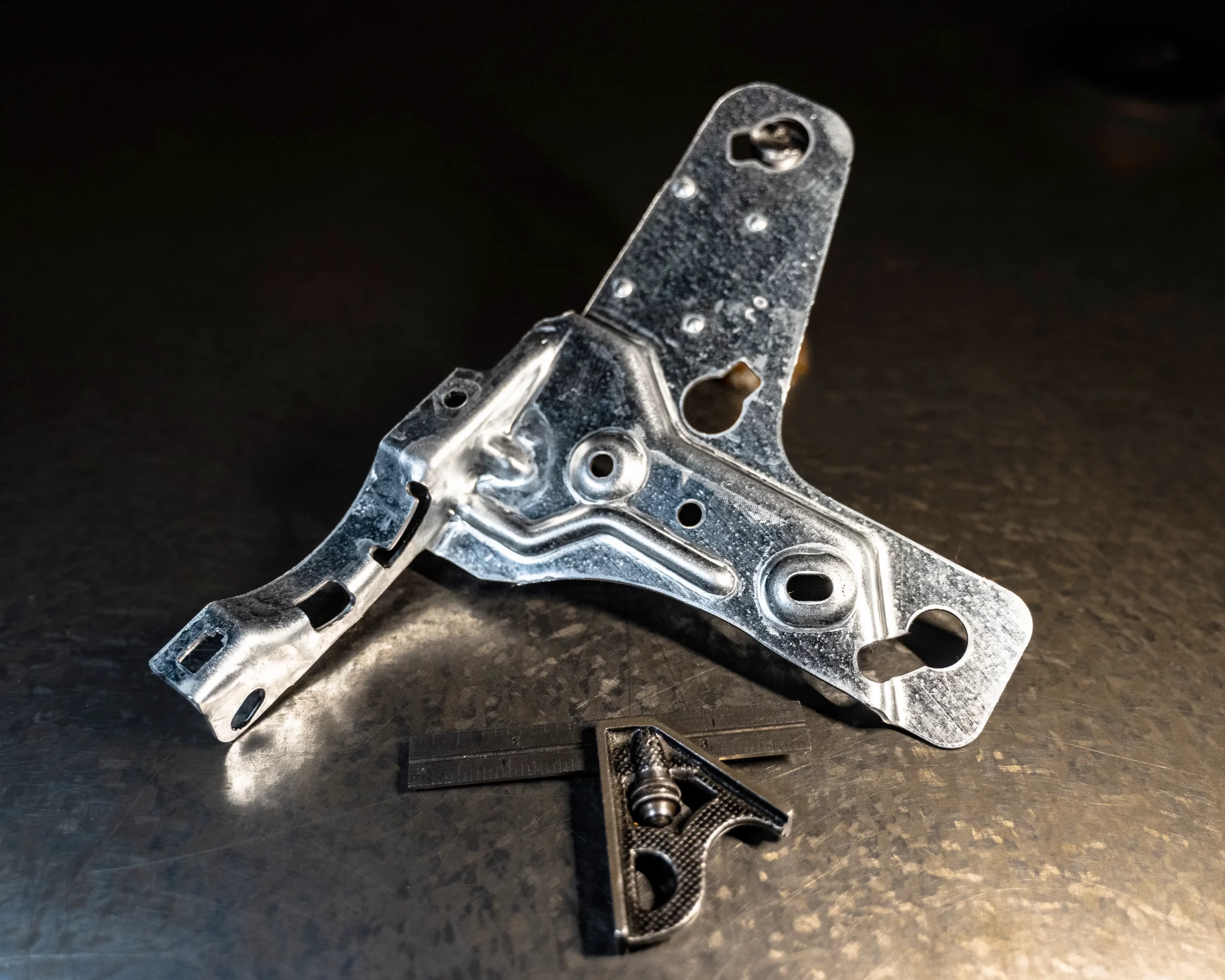
Ampex is experienced in supporting automotive and engine-critical programs that require strict weld quality, and consistent repeatability. Ampex is equipped with a Markforged 3D printer that we use to print custom pure carbon fiber fixtures. Our equipment and processes are structured to meet the rigorous standards expected in engine-related and safety-critical applications.
Ampex is familiar handling subassemblies for appliance, automotive, lawn and garden, industrial equipment, and general manufacturing applications.
Does Ampex install PEM nuts or threaded inserts?
Yes. Ampex can install PEM nuts, threaded inserts, and related fastening hardware as part of both stamping and assembly operations. Depending on production volume and part geometry, PEM insertion can be performed in-die during stamping or as a secondary operation after the part is formed. In-die insertion units are typically used for high-volume. While secondary insertion is used for parts where the tooling cost is not justified or the part geometry is not applicable for in die units.
Can Ampex supply completed subassemblies instead of loose components?
Yes. Ampex can review opportunities where customers prefer finished or partially assembled components instead of loose stamped parts, wire forms, springs, or hardware.
Ampex is especially cost-effective on high-volume plastic-to-metal and rubber-to-metal assembly programs where the annual volume supports efficient production tooling, repeatable assembly processes, and competitive piece pricing. Depending on the application, Ampex can review subassemblies involving stamped metal components, wire forms, riveted components, staked components, spot-welded components, low-cost plastic-to-metal components, rubber-to-metal components, and other assembly items.
For very high-volume programs, typically around 500,000 to 1,000,000+ parts per year, Ampex can often be highly competitive with overseas sourcing, including China, especially when customers factor in freight, tariffs, minimum quantity order, product lead time, quality response time, and the United States push towards domestic manufacturing.
These programs are a strong fit when the customer needs a reliable domestic supplier that can manufacture the metal component, coordinate or source related rubber or plastic components, complete the assembly, and deliver production-ready subassemblies rather than multiple loose components.
Ready to start your next project?
Partner with Ampex for precision metal stampings built to perform.
Quality, Inspection and Documentation
Is Ampex ISO 9001 certified?
Yes. Ampex Metal Products maintains ISO 9001:2015 certification for the manufacture and assembly of metal stampings, wire forms, and 4-slide and multislide stamping. We hold the latest version of the certification and undergo full re-certification annually, along with 1–2 external surveillance audits each year in each division of Ampex to ensure ongoing compliance.
Ampex is also IATF-compliant and experienced in supporting automotive, engine-critical, and Tier 1 programs that require strict quality systems, traceability, and process control. Our quality management system includes process control, documented procedures, calibrated inspection equipment, and continuous improvement practices that meet the expectations of automotive and industrial OEMs.
Does Ampex support PPAP documentation?
Yes. Ampex supports PPAP-related documentation when required by the customer, OEM, or Tier 1 supplier.
PPAP, or Production Part Approval Process, is commonly required for automotive, appliance, industrial, and other quality-controlled manufacturing programs where the customer needs documented evidence that the production process can consistently manufacture parts to the approved drawing, specification, and quality requirements.
Depending on customer requirements, Ampex can support PPAP documentation for metal stampings, wire forms, fourslide and multislide components, springs, formed metal parts, welded components, riveted components, staked components, and production subassemblies.
PPAP documentation may include (when applicable):
- Part submission warrant, also known as PSW
- Process flow diagram
- PFMEA, or process failure mode and effects analysis
- Control plan
- Dimensional inspection results
- Material certifications
- Plating, coating, heat treat, or finish certifications when applicable
- Initial sample inspection report
- Capability studies when required
- Measurement system analysis, including Gage R&R when required
- Approved engineering drawing
- Customer-specific requirements
What quality inspection equipment does Ampex use?
Ampex uses quality inspection equipment and production quality controls to support precision metal stampings, wire forms, springs, fourslide parts, and multislide components.
Ampex uses multiple pieces of equipment for 1st article inspection, PPAP submission, and or regular in process inspection:
- CMM inspection
- Quantum X FARO Arm
- Keyence vision system
- Optical comparator
- Force testing
- Torque testing
- Hardness testing
- Micrometer inspection
- Depth micrometers
- Height gages
- Dial indicators
- Pin gages
- Calipers
- Go/no-go gages
- Custom inspection fixtures
- Eddy current testing, when required by the application
- Gage and fixture-based inspection
Ampex’s quality process is designed to verify that production parts meet the approved drawing, customer specification, and functional requirements.
Can Ampex support automotive quality requirements?
Yes. Ampex is ISO 9001 Certified and IATF compliant has experience supporting automotive, OEM, and Tier 1 supplier programs, including engine-critical production application.
Automotive programs often involve PPAP documentation, process controls, work instructions, lot control, material certifications, inspection reports, control plans, and customer-specific requirements.
Can Ampex inspect critical dimensions on stamped or formed parts?
Yes. Critical dimensions should be clearly identified on the drawing. Ampex reviews all inspection requirements and determines the appropriate inspection method based on part geometry, tolerance, and customer expectations.
Prior to production, 1st article approval samples are submitted into our quality department and approved. During production, critical dimensions are checked specified in our work instructions, and operators perform regular in-process checks to ensure the part remains within specification throughout the production run.
Can Ampex provide material certifications?
Yes. If required or requested, Ampex can provide full certification, including material certification, coating certifications, heat-treat results, salt spray test, and any customer-specific documentation needed for approval or PPAP submission.
Ready to start your next project?
Partner with Ampex for precision metal stampings built to perform.
Industries and Applications
What industries does Ampex serve?
Ampex primarily serves OEM, Tier 1, and high-volume industrial manufacturers that require precision metal stampings, wire forms, springs, fourslide components, multislide parts, tooling-supported production components, and value-added subassemblies.
Core industries include:
- Automotive & Tier 1
Engine-critical components, brackets, clips, formed metal parts, wire forms, springs, spot-welded components, staked parts, riveted parts, and high-volume plastic-to-metal or rubber-to-metal subassemblies. - Appliance & HVAC
Stamped brackets, housings, shields, guards, clips, wire forms, spring components, structural parts, pre-plated material applications, and production assemblies. - Electrical & Electronics
Terminals, contacts, shields, housings, clips, bus bar-related components, spring contacts, conductive parts, and formed metal components requiring material, plating, or conductivity considerations. - Motors, Pumps & Mechanical Components
Stamped and formed components used in motor assemblies, pump systems, brackets, retainers, clips, springs, and related metal subassemblies. - Consumer Products & Hardware
High-volume stamped parts, formed wire components, clips, brackets, fastened parts, coated components, and assembled metal or plastic-to-metal components. - Industrial & General Manufacturing
Production stampings, wire forms, spring components, welded components, riveted assemblies, staked assemblies, PEM hardware assemblies, and custom metal subassemblies. - Military & Defense Hardware
Welded O-rings, small to large stampings, structural supports, wire forms, brackets
Ampex is best suited for production programs where customers need repeatable quality, tooling support, high-volume manufacturing, domestic supply chain reliability, and a supplier capable of supporting more than just loose components.
Ready to start your next project?
Partner with Ampex for precision metal stampings built to perform.
Domestic Sourcing and Supplier Fit
Why choose a U.S.-based metal stamping supplier?
Choosing a U.S.-based metal stamping supplier can help manufacturers reduce supply chain risk, improve communication, shorten lead times, and keep production running smoother with fewer headaches.
For OEMs and Tier 1 suppliers, domestic manufacturing is especially important when parts are high-volume, quality-sensitive, time-sensitive, or critical programs. A U.S.-based supplier can provide you parts quickly and keep your internal production lines running smoothly.
A domestic metal stamping supplier can help support:
- Faster engineering communication
U.S.-based suppliers can answer questions on your time zone and join a zoom call with you to discuss a project or address concerns. - Shorter and more stable supply chains
Keeping production closer to the customer can reduce dependence on long ocean freight lanes, customs delays, and avoid the rising U.S. tariffs. - Better production support
During part production a U.S. supplier like Ampex can delivery parts to you with a shorter lead time. Especially with our warehousing of finish inventory our customers. - Improved quality response
Ampex provides consistent workmanship, and long-term process reliability. This contributes directly to our strong quality performance, with Ampex averaging 90% or higher on customer scorecards year after year across major OEM and Tier 1 programs. - Lower hidden supply chain costs
Overseas sourcing may look lower on piece price, but at the risk to increasing tariff of U.S. imported goods, long lead time that risks your production lines shut down, and long project launch timelines. - Domestic sourcing and reshoring initiatives
Many manufacturers are working to bring more production back to the United States to improve supply chain control and reduce overseas dependency for products. Ampex offers our customers low-cost tooling competitive to overseas tooling cost like China for reshoring efforts. - Easier supplier visits
Customers can visit a U.S.-based facility to see their part production and a lunch hosted by the Ampex team. - Stronger protection of tooling and engineering knowledge
Ampex has produced metal parts since 1960, we have generations of experience crafting metal components. U.S. based companies have decades of experience that is lacked in low-cost countries.A U.S.-based supplier like Ampex can provide competitive long-term value through engineering support, quick responsiveness, and reduced supply chain risk.
Is Ampex a good fit for reshoring metal stampings or wire forms?
Yes. Ampex is a strong fit for reshoring programs, especially when tooling cost is a major factor. We offer low cost tooling for reshoring projects to help bring more manufacturing back to the United States. Ampex is here to help buyers transition production from overseas suppliers to a domestic source. Because Ampex builds tooling in-house, we can provide competitive pricing to China and short lead times to prevent any hold ups in your internal production lines.
Ampex can evaluate existing tooling and offer tooling refurbishment or repair if tooling transition is a viable option. For new tooling, our in-house tool and die team can design and build progressive dies, 4-slide tooling, multislide tooling, and wire-forming tooling optimized for raw material efficiency.
Ampex has helped many of our Tier 1 customers with a smooth transition for reshoring projects involving high-volume stampings, wire forms, welded assemblies, and components requiring secondary operations.
Can Ampex replace an existing metal stamping supplier?
Yes. Ampex frequently helps customers keep their production lines on schedule during supplier transitions and can take over production when an existing stamping supplier stops meeting part requirements.
If existing tooling is available, Ampex can evaluate the die condition and refurbish your tooling. Ampex requests that all spare parts, die drawings, sample parts, and left-over raw material to be included in the transition of suppliers, this will significantly help our team speed up the transition of suppliers.
Once tooling is validated, Ampex can quickly move into sample approval, and resume your production.
Can Ampex take over a troubled production program?
Yes. Ampex frequently helps customers keep their production lines on schedule when an existing supplier begins causing quality issues, or delivery delays. We help our customers in fast transitions and can take over production quickly when a supplier is no longer meeting part requirements.
If existing tooling is available, Ampex can evaluate the die condition, and refurbish or repair the tooling as needed. Our in-house tool and die team is experienced in restoring transferred tooling so it can run reliably in our presses without prolonged delays.
To accelerate the transition, Ampex requests that all spare parts, die drawings, sample parts, and any remaining raw material be included in the supplier transfer. This will significantly speeds up our teams ability to become production ready.
What makes a project a strong fit for Ampex?
A strong project fit for Ampex usually involves repeat production and high-volume stamping or wire forming.
Ampex is best suited for production programs where the customer needs precision metal stampings, wire forms, springs, fourslide parts, multislide parts, secondary welding operations, or high-volume subassemblies manufactured consistently over time.
Strong-fit projects often include:
- Repeat annual production
- Medium- to high-volume
- Parts requiring progressive die stamping, wire forming, spring making, fourslide stamping, or multislide stamping
- Components that require secondary operations such as staking, riveting, tapping, spot welding, inspection, packaging, or assembly
- Plastic-to-metal or rubber-to-metal subassemblies with high annual usage
- OEM, Tier 1, appliance, automotive, electrical, industrial, or other production manufacturing programs
- Critical programs requiring quick delivery time, 100% quality expectations, and warehoused finished inventory at no expense to our customers.
Ampex is especially competitive when annual volumes are high enough to take advantage of dedicated machines with built in tooling, repeatable production, and high-speed manufacturing equipment. This can include progressive stamping presses, fourslide and multislide equipment, CNC wire forming, CNC spring coiling, and production-focused secondary operations.
For plastic-to-metal and rubber-to-metal subassemblies, Ampex is often a strong fit when volumes exceed roughly 500,000 to 1,000,000 parts per year.
What projects may not be a good fit for Ampex?
A project may be a weaker fit for Ampex if it is a one-time prototype, very low-volume job, or fabrication work. However, Ampex can still review your project and let you know if we can help your project.
Ready to start your next project?
Partner with Ampex for precision metal stampings built to perform.
RFQ and Quoting
Can buyers submit multiple parts in one RFQ package?
Yes, it is encouraged for buyers are encouraged to submit multiple parts in one RFQ package for review, including stamped parts, wire forms, springs, fourslide parts, multislide components.
If you are unsure if Ampex can support a part in your pipeline, include it in your RFQ package and Ampex can let you know if it is within our capabilities.
Ampex is structured to onboard projects across our different departments simultaneously, including tooling, stamping, wire forming, spring manufacturing, fourslide and multislide stamping, secondary operations, and assembly support including rubber/plastic-to-metal subassemblies. Customers should not have to worry about Ampex’s ability to handle multiple parts or new tooling projects at the same time. Ampex has an experienced team, experienced tool room, and processes in place to quickly onboard jobs.
What file types are useful for an RFQ?
Ampex accepts a wide range of engineering and document file types including:
- 2D drawings: dxf, dwg, pdf
- 3D CAD models: stp, step, igs, iges, cad, blend, prt
- SolidWorks native files: sldprt, sldasm
- Office documents: doc, docx, xls, xlsx, ppt, pptx, txt
- Images and reference photos: jpg, jpeg, png, svg, psd • Compressed packages: zip, rar, gz
What should engineers include in a stamping drawing?
If an engineer wants to verify he has included all of the correct information into his part drawing in order for his buyer to source a stamped part correctly. Ampex recommends to include the following information:
- Material type/grade and thickness
- Flat pattern or developed blank (if available it is appreciated)
- Critical dimensions and key product characteristics
- Tolerance requirements
- All dimensions are properly accounted for
- Cleanliness specifications and deburr requirement if applicable
- Plating, coating, or heat-treat requirements
- Functional requirements or performance notes (English translated)
- Quality requirements (PPAP level, inspection points, special characteristics)
- Annual usage or forecasted volume
- 2D drawings and 3D CAD files (including SolidWorks files if applicable)
What should buyers include in a sourcing RFQ?
For the most accurate and complete quote, buyers should include:
- Part status:Is the part newor currently in production?
- Target pricing if available
- 2D drawings, 3D CAD files, part print drawings
- Annual volume and estimated part life
- Project timeline
- Special packaging specifications (if applicable)
- Expected timing for supplier selection
This information helps Ampex Metal Products understand the scope of your project.
Can Ampex sign an NDA?
Yes. Ampex can sign an NDA before reviewing any drawings, proprietary specifications. We are happy to sign your company’s standard NDA and can also review customer-specific confidentiality requirements when needed. Protecting your intellectual property is a standard part of our quoting and onboarding process.
How long does quoting take?
As a general guideline:
- Simple parts: Quotes can often be completed within 24-48 hours.
- Parts requiring outside pricing (plating, heat treat, coatings, specialty materials, secondary processes): 7–10 business days.
- Complex assemblies or multi-component projects: Quotes depend on outside pricing, Ampex quoting team will regularly call outside service companies asking for pricing.
The more information provided to Ampex will help us quote your part or project in a timely manner.
Ready to start your next project?
Partner with Ampex for precision metal stampings built to perform.
Buyer and Engineer
How do I find a metal stamping manufacturer in Ohio?
Buyers searching for a metal stamping manufacturer in Ohio should look for a supplier that has been established for many decades, maintains ISO-certified quality systems, and has proven experience supporting production programs similar to their own.
A strong supplier should have a variety of press capacity, knowledge in their field, material experience, variety inspection equipment, and production systems needed to support repeat manufacturing. Buyers should also look for a manufacturer with experience handling OEM, Tier 1, appliance, automotive, electrical, industrial, or other high-volume production requirements.
It is also helpful to choose a supplier with a variety of in-house departments, including metal stamping, progressive die stamping, fourslide stamping, multislide stamping, CNC wire forming, spring manufacturing, in house tooling, secondary operations equipment, and assembly support. Working with a supplier that can support multiple part families or related processes can help reduce supplier count, simplify scheduling, , and create a stronger long-term sourcing relationship.
Ampex Metal Products has been serving customers since 1960 and maintains an ISO 9001 certified quality management system for the manufacture and assembly of metal stampings. This gives us generations of experience, combined with formal quality certification makes us a supplier capable of supporting OEM, Tier 1, appliance, automotive, electrical, and industrial manufacturing programs.
How do I find a progressive die stamping supplier?
To find the right progressive die stamping supplier, buyers should evaluate the range of press lines the company has. A strong supplier should have the tool and die experience, a variety of stamping press lines, certified quality systems, the latest inspection equipment, and secondary operation ability needed to support any of your production needs.
Buyers should also look for a supplier with experience producing similar part types and support repeat production with warehoused finished inventory. The best progressive die stamping suppliers can review the part design, recommend manufacturability improvements, build and maintain production tooling, manage material and finish requirements, and maintain consistent quality after launch.
How do I find a wire forming supplier?
To find the right wire forming supplier, buyers should evaluate more than whether the supplier can bend wire. A strong wire forming supplier should have the equipment range, material experience, manufacturability knowledge, and production systems needed to support repeat manufacturing.
Buyers should look for a supplier with CNC wire forming capability, experience with variety of wire diameters, and the ability to form different materials based on part geometry, functionality requirements, and spring back characteristics. Ampex can support wire forming applications using wire diameters from Ø 0.03” up to Ø 3/8″, depending on the material, part design, and bend complexity.
Material experience is especially important because different wire materials behave differently during forming. Some materials have higher springback, some require frequent adjustments to hold the final shape, and some materials can crack, split, or weaken if the bend radius, or tooling approach is not suitable for the part.
How do I find a spring manufacturer?
To find the right spring manufacturer, buyers should evaluate the supplier’s spring-making capability, wire diameter range, production volume fit, quality systems, and ability to manufacture repeatable parts to specification.
A strong spring manufacturer should understand your requirements and end-use application before quoting. Springs are used across many applications, including automotive, appliance, electrical, industrial, hardware, consumer products, and production subassemblies.
Material and forming experience are important because spring performance depends on more than part shape. The supplier should understand how different spring materials behave during forming, how springback affects the final geometry, how load requirements impact design, and how material selection, finish, and heat treat affect the finished part.
Ampex Metal Products supports spring manufacturing along with wire forming, fourslide stamping, multislide stamping, progressive die metal stamping, tooling, secondary operations, and production subassemblies. This allows customers to source springs, wire forms, clips, brackets, fastened components, and related metal parts from one domestic manufacturing partner when the program requires multiple formed metal components.
How do I know whether a part should be stamped, formed, fabricated, or machined?
The best manufacturing process depends on part geometry, material thickness, tolerance requirements, annual volume, tooling budget, strength requirements, and how the part functions in the final assembly.
Stamping is usually the best fit for high-volume production, especially when annual usage is greater than 10,000 pieces and the part is made from uniform sheet metal. Stamping is commonly used for brackets, clips, terminals, shields, housings, covers, tabs, and other repeatable metal components. The upfront tooling cost is higher, but the per-part cost can become very competitive when the volume justifies dedicated production tooling.
Fabrication is usually used for larger, heavier, or more complex structures that are built by cutting, bending, welding, fastening, or assembling multiple components together. Fabrication can be a better option when the part is too large, too low-volume, or too structurally complex for traditional stamping.
Machining is typically used when the part requires very tight tolerances, complex 3D geometry, threaded features, precision pockets, or features cut from solid plate, or block material. Machining may be the right process for low-volume precision parts, but for higher-volume production, a machined part can sometimes be redesigned as a stamped components to reduce piece price cost
What is the difference between a metal stamping supplier and a sheet metal fabrication shop?
A metal stamping supplier is built for high-volume, repeatable production using dedicated dies and stamping presses. Although tooling requires upfront investment and lead time, stamping can produce consistent parts at a lower per-part cost once volume justifies the tooling.
A sheet metal fabrication shop is built for flexibility, prototypes, and low-to-medium volume work. Fabrication typically uses laser cutting, press brakes, welding, riveting, and manual or semi-automated assembly. Setup is usually faster and requires less dedicated tooling, but per-part costs are higher.
Stamping is usually best for repeat production parts such as brackets, clips, terminals, shields, covers, housings, and other uniform sheet metal components. Fabrication is usually better for prototypes, larger structures, enclosures, frames, or parts that require multiple components to be cut, bent, welded, or assembled.
Buyers should consult with their team and choose based on annual volume, part geometry, tooling budget, lead time, tolerance requirements, and long-term production needs. For higher-volume programs, Ampex is happy to suggest cost savings ideas when the volume is suited for stamping.
What is the difference between a stamping supplier and a tool and die shop?
A tool and die shop builds tooling. A stamping supplier runs production parts using tooling. Some companies, including Ampex, support both in-house tooling and production stamping, which can simplify communication and reduce transition risk between tool build and production.
Ready to start your next project?
Partner with Ampex for precision metal stampings built to perform.
Let us take care of your metal forming needs.
At Ampex, we embrace a “Customer-centric business strategy”, one that puts Customers at the center of our most important business decisions.
Call us Today